

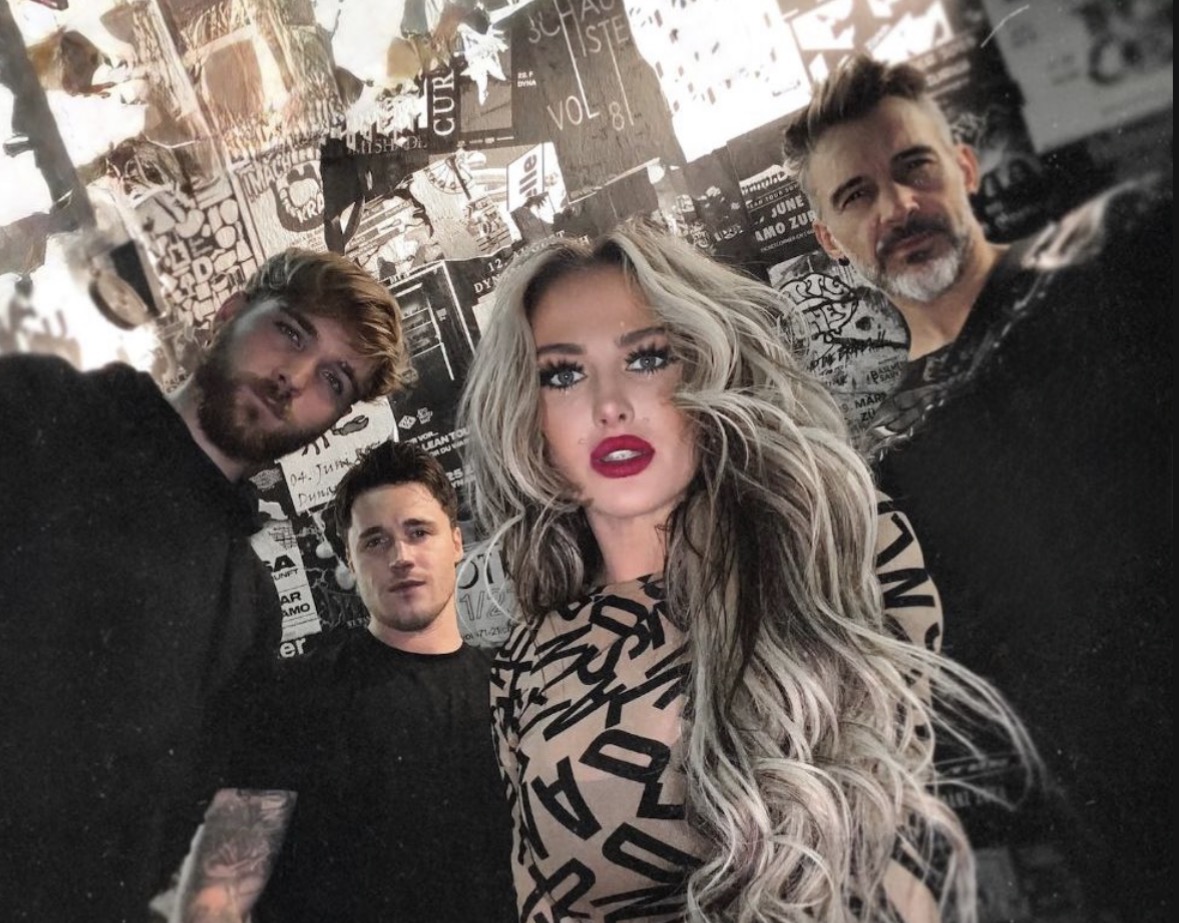
Butcher Babies are back with incredible new album NIGHTBLOOM.
We sat down with frontwoman Heidi Shepherd to talk all about the new album.
It feels like NIGHTBLOOM marks a new chapter for Butcher Babies, both personally and as a band. After the line-up change and everything that came with it, did you ever question whether Butcher Babies would continue, and what ultimately gave you the drive to come back?
This almost feels like a new book in a series. And the excitement we feel around it is almost like how it felt starting this band 17 years ago.
It’s fresh and it feels like the possibilities are endless. With the line-up change, it was something that we knew was going to happen a couple of years before it did. So, we were prepared for the shift.
There was never really a question of if we were going to continue, it was only the direction that we wanted to move with it. Our first tour with a single vocalist was in Fall of 2023, and the reaction was hugely positive. So that definitely lit a fire in us.
You’ve described NIGHTBLOOM as being about survival rather than suffering. When you were writing about experiences that had been buried for years, was there a particular moment when you realised the album was becoming something empowering rather than simply a record about pain?
Art is so beautiful and we are so lucky to be able to turn negative experiences into a positive with our music.
These were songs that I needed to put onto paper to help myself face and overcome these emotions. That experience in itself was liberating.
I remember writing Black Clouds Over Georgia in tears. Tears of finally releasing these emotions and giving those memories a new positive home. Then looking at where I am in my life and realizing that without those experiences, I wouldn’t be who or where I am today.
Negative experiences or emotions in life don’t have to define us. It’s how we grow and overcome, that should be the main focus. This is how ‘NIGHTBLOOM’ became empowering to me.
There are some incredibly personal experiences behind these songs, from relationships and religious ostracism to grief and the end of a 20-year friendship. Were there any subjects you initially thought were too personal to turn into Butcher Babies songs?
Yes, hahah all of them. However, once I allowed myself to really dig into these subjects, I realized that I need to tell these stories. Once I put pen to paper to write, the songs just started water falling out of me. It was almost like they had just been waiting there for me to allow it.
Throughout the years, there have been a few ultra personal songs on our albums, but this one became almost like my teenage journal.
Once I started sending our producer, Howard Benson, the demos, he really encouraged me to not hold anything back. To not think about if it’s ‘metal’ or not. To not think about what people will think. To focus on being honest and authentically me. He really gave me a confidence in writing that I needed to make these songs come to life.
Blame It on the Wind takes something that happened back in 2012 and explores how that connection stayed with you for years. What was it like revisiting that memory with the perspective you have now, and did writing the song change the way you look at what happened?
This song was one of my favorites to write because it took something taboo that we normally wouldn’t talk about and pushed it to the forefront.
Looking at that experience through the lens of who I am, and how the world is today was interesting. Social norms are different now. What I saw as inappropriate or taboo in 2012 are totally acceptable now.
I hid a relationship and part of me for several years thinking that I’d be professionally rejected. What made that encounter so exciting then was, of course, the connection, but it also felt dangerous. I believe that that part of human nature will never change.
Henry has said that ‘writing with purpose’ became the theme of the record and that every lyric, layer and detail had a reason for being there. How did that approach change the way you wrote NIGHTBLOOM compared with previous Butcher Babies albums?
As much as I absolutely love and cherish our other albums, there was really a sense of story telling here that wasn’t the focus before.
When dealing with something as personal as these songs, we really wanted to make sure that nothing came out half-assed. We sat together with every note of every song to make sure that it served the song with meaning. The tone of the guitars in different songs can work with the lyrics and vocals to evoke the emotion that we are trying to convey.
In the majority of our previous work, the music was written first, then we put the lyrics and melody over top of it. For this body of work, the story came first. Then we built the song around that.
You worked with Howard Benson and a wider production team on the record, while also pushing the Butcher Babies sound forward without losing its aggression. What did Howard hear in the band that helped you find the sound of this new era?
We spoke about the goal of the new music, and he immediately understood what we were going for. After we recorded the first song, we spoke about the vision of the rest of them and it really all happened organically from there. Howard has a very special ear for melody and harmonies. I’m incredibly grateful to have been able to work with him on these songs.
You’ve called NIGHTBLOOM the most important work Butcher Babies have ever done. With the band returning revitalised and entering this new chapter, what do you hope people understand about Butcher Babies in 2026 that perhaps they didn’t before?
For a long time, I think people had a very specific idea of what this band was supposed to look like and sound like. We came out of the gate loud, aggressive and pretty unapologetic, and I’m incredibly proud of that. But when you’ve been a band for 17 years, you’re not the same people you were when you started.
With ‘NIGHTBLOOM’, we stopped worrying about what a Butcher Babies song was ‘supposed’ to sound like and started asking what the songs actually needed. Sometimes that meant heavy screaming, and sometimes it meant pulling everything back and being completely vulnerable. We gave ourselves permission to explore melody, emotion, and different influences without worrying whether it fit neatly into the box people had built around us.
And strangely, after everything this band has gone through, I feel more connected to Butcher Babies than I have in years. There’s this renewed excitement between the band right now. We’re having fun again. We’re hungry again. And we’re creating with purpose rather than trying to recreate a version of ourselves from ten plus years ago.
So, if there’s one thing I hope people understand about Butcher Babies in 2026, it’s that we aren’t trying to preserve what this band was. We’re discovering what it can become.
We always end with some random questions. You could have dinner with three people – dead or alive – who would you pick?
Henry Flury, Devin Nickles, & Sean Violet (my band <3)
If you had to change the band up and each member had to have a different role, who would play what?
We’ve actually done this before. Our bass player is a phenomenal drummer and vocalist. So, Sean on vocals, Me on bass, and Henry on drums, and Devin on guitar.
Have you ever thought about packing in music? If so, what stopped you?
Definitely not. I need it. It’s the most important thing in my life. Music saved and continues to save my life. So, I can’t stop.